College of Science

Department of Biological Sciences


Hockmeyer Construction CAm

Appy for Faculty Positions

make a gift

BioMedia Center

Graduate Web

contact webmaster

Department of Biological Sciences
915 W. State Street
West Lafayette, IN 47907
ph. (765) 494-4408
Fax (765) 494-0876

College of Science

Seminar Listing


No Seminars Scheduled within next 7 days
Click here to view calendar

Biology Dept.

Calendars

News

Purdue biologist gets boost to unravel cells' secrets
more

Purdue launches EcoliHub; unites scientists and information throughout the world
more

Purdue researchers obtain a snapshot clarifying how materials enter cells
more

Purdue's College of Science reflects on the past, sets stage for next century.
more


Edwin Umbarger Distinguished Professor of Biology

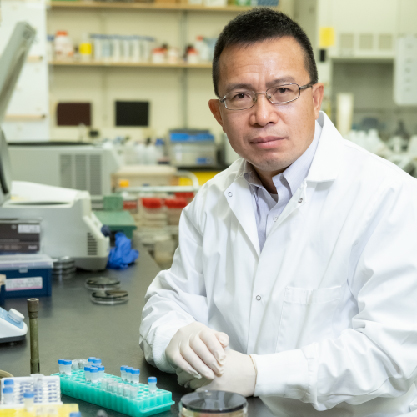
Stan GelvinProfessor Stanton Gelvin was named the Edwin Umbarger Distinguished Professor of Biology at the Board of Trustees meeting on June 20, 2008.

Dr. Gelvin joined the Department of Biological Sciences at Purdue as an assistant professor in 1981, was promoted to associate professor in 1985, and full professor in 1991.

He has an international reputation for his work in the field of DNA transfer from the soil bacterium Agrobacterium tumefaciens to plant genomes. Dr. Gelvin has played a major role in developing the Agrobacterium system. This includes three main areas – the bacterium's processes, the expression of its transferred genes and the part the host plant plays in the transformation.

Awards received by Dr. Gelvin include the Herbert Newby McCoy Award in 2004, which is presented annually to the student or faculty member who made the greatest contribution of the year to science. He was elected a fellow of the American Academy of Microbiology in 2006 and received a Presidential Young Investigator Award from the National Science Foundation in 1984.

Dr. Gelvin received a bachelor's degree in biology from Columbia University, his M.S. from the Department of Molecular Biophysics and Biochemistry, Yale University, and his doctorate in biology from the University of California, San Diego. He remained in San Diego as a post-doctoral research associate in the Laboratory of Dr. Stephen H. Howell until 1978 then joined the laboratory of Dr. Eugene Nester at the University of Washington, Seattle before coming to Purdue in 1981.

Purdue biologist gets boost to unravel cells' secrets


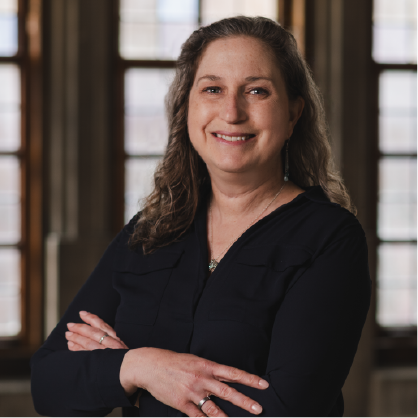
Jue ChenA Purdue University scientist who studies the inner working of cells has been named a Howard Hughes Medical Institute investigator, an appointment that could lead to insights into the causes of diseases such as cystic fibrosis.

Jue Chen, a structural biologist, will receive about $1.5 million a year for at least the next five years to support her and her Purdue lab as they delve into her research.

Chen is only the third person from an Indiana school to be named an investigator and the only one currently in Indiana.

The Hughes institute, a nonprofit research organization based in Chevy Chase, Md., planned to announce early today that 56 scientists from across the country, including Chen, had been chosen from among 1,070 applicants.MORE

Purdue launches EcoliHub; unites scientists and information throughout the world

WEST LAFAYETTE, Ind.
ECOLIHUBPurdue University announced Wednesday (May 7) the launch of EcoliHub, a central online source for information about the bacteria Escherichia coli. Barry L. Wanner, who is leading the project, said E. coli has served as a model organism that has led to innumerable discoveries about fundamental cellular processes that are key to understanding all living cells.

"E. coli is the most deeply understood organism at the molecular level," said Wanner, who is a professor of biological sciences at Purdue. "It has great importance as a model organism. Because so many researchers have worked with E. coli, the information is spread out among many different databases and resources. The goal of EcoliHub is to make the vast information about E. coli more accessible by bringing these resources together." MORE

ECOLI HUB

Herbert Newby McCoy Award Winner

Richard KuhnThe McCoy Award, established in 1964 through a bequest from Dr. Ethel Terry McCoy in memory of her husband, is a top research award at Purdue. It is presented annually to the student or faculty member "in the science departments of Purdue making the greatest contribution of the year to science."

Richard Kuhn was recognized for his independent contributions to molecular and structural understanding of the viral process, which has produced fundamental new insights into both flavivirus and alphavirus structure, assembly and replication.

$42 million raised toward Purdue's $304 million Access and Success Campaign

StauffacherWEST LAFAYETTE, Ind. - A professor, two Purdue alumni and a friend of the university have stepped forward to fund scholarships in a variety of disciplines, helping launch the university's new $304 million Access and Success Campaign. The university has raised more than $42 million toward the fundraising goal since July 1, 2007, President France A. Córdova announced at a news conference Wednesday (April 9).

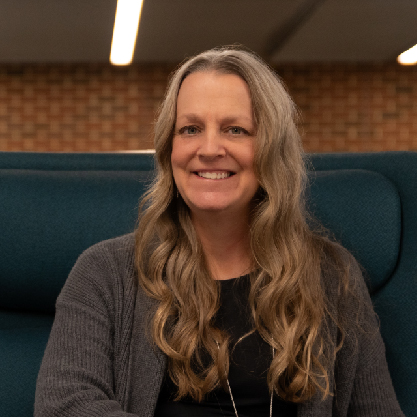
The most recent donations include a gift from Purdue biological sciences professor Cynthia Stauffacher, who leads the Purdue Cancer Center's Chemical and Structural Biology Program. "Our students are our highest priority at Purdue," Stauffacher said. "I am pleased to be able to support their careers and progress at the university. Giving them a helping hand ensures that they can concentrate their efforts on their intellectual growth and academic success at Purdue. It is an investment in the future of our state, the nation and the world." MORE

Findings reveal how dengue virus matures, becomes infectious

WEST LAFAYETTE, Ind. -
dengue virusBiologists at Purdue University have determined why dengue virus particles undergo structural changes as they mature in host cells and how the changes are critical for enabling the virus to infect new host cells. The findings pertain to all viruses in the family of flaviviruses, which includes a number of dangerous insect-borne diseases such as dengue, West Nile, yellow fever and St. Louis encephalitis. Dengue is prevalent in Southeast Asia, Central America and South America. The virus, which is spread by mosquitoes, infects more than 50 million people annually, killing about 24,000 each year, primarily in tropical regions.

The researchers detailed critical changes that take place as the virus is assembled and moves from the inner to the outer portions of its host cell before being secreted so that it can infect other cells. Virus particles are exposed to progressively less acidic conditions as they traverse this "secretory pathway," and this changing acidity plays a vital role in the maturation of the virus.

"This is possibly the most detailed understanding of how any virus matures," said Michael Rossmann, the Hanley Distinguished Professor of Biological Sciences.

The research is a collaboration of work in two Purdue laboratories, one operated by Rossmann and other operated by Jue Chen, an associate professor of biological sciences. They led the research with I-Mei Yu, a postdoctoral research associate working with Chen; and Long Li, a doctoral student working with Rossmann.

Findings are detailed in two back-to-back research papers appearing Friday (March 28) in the journal Science. The papers' co-authors include Yu, Li, Rossmann, Chen and Richard J. Kuhn, a professor and head of Purdue's Department of Biological Sciences.

More

New technique takes a big step in examination of small structures

Image of bacteriophage Epsilon15WEST LAFAYETTE, Ind. -
A team led by a Purdue University researcher has achieved images of a virus in detail two times greater than had previously been achieved. Wen Jiang, an assistant professor of biological sciences at Purdue, led a research team that used the emerging technique of single-particle electron cryomicroscopy to capture a three-dimensional image of a virus at a resolution of 4.5 angstroms. Approximately 1 million angstroms would equal the diameter of a human hair.

"This is one of the first projects to refine the technique to the point of near atomic-level resolution," said Jiang, who also is a member of Purdue's structural biology group. "This breaks a threshold and allows us to now see a whole new level of detail in the structure. This is the highest resolution ever achieved for a living organism of this size."

Details of the structure of a virus provide valuable information for development of disease treatments, he said.

"If we understand the system - how the virus particles assemble and how they infect a host cell - it will greatly improve our ability to design a treatment," Jiang said. "Structural biologists perform the basic science and provide information to help those working on the clinical aspects." More


BioMedia Center for Instructional Design

BioMedia

The BioMedia Center for Instructional Design has a new Flash web site with many resources and outreach opportunities for teachers and students (http://biomedia.bio.purdue.edu). Be sure to check it out. Information is available for the two 2008 sessions of the Hughes Summer Biology Experience for 9th & 10th grade teachers and students and the "Go with the Flow" science camp experiences for elementary teachers and their students. Teachers may download courseware and lesson plans for a variety of classroom activities. A new java version of BacterialD for learning to identify microbiological unknowns is available. Resources for System Thinking (STELLA models) and bioinformatics are available. New instructional resources for pH, buffers, electrophoresis are coming.